
Despite sharp interest rate cuts expected in this financial year amid easy liquidity conditions, state-run banks are treading cautiously on their loan growth projections for FY26. Most large banks are projecting loan growth at 11-13 per cent, almost similar to the previous financial year.

Bank of Baroda has partnered with Reliance Jio to provide access to its mobile banking application, 'bob World Lite', for users of Jio feature phones, aiming to promote financial inclusion and digital payments.

India's privatisation push, once projected as a cornerstone of economic reform, has suffered another setback, with the Centre set to call off the IDBI Bank stake sale, highlighting the political and structural constraints shaping the country's disinvestment policy, experts say.

Moody's Ratings has downgraded India's growth forecast for financial year 2026-27 (FY27) to 6 per cent from 6.8 per cent, attributing the revision to weaker consumption and industrial activity, elevated energy prices, and rising input costs stemming from the West Asia conflict.

The Reserve Bank of India has cut repo rates, the rate at which it lends money to banks, by 75 basis points since January this year, but most banks have not lowered lending rates.

A special court in Mumbai has denied bail to Pune businessman Amit Thepade in a Rs 117-crore money laundering case, citing the serious threat economic offences pose to the country's financial health. The court highlighted substantial evidence linking Thepade to the crime under the Prevention of Money Laundering Act (PMLA).
A special court in Mumbai has denied bail to Pune businessman Amit Thepade in a Rs 117-crore money laundering case, citing the serious threat economic offences pose to the country's financial health.
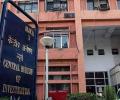
A special court in Mumbai has dropped corruption charges against Guruashish Construction and its directors in a multi-crore cheating case after the CBI found no public servants involved in the alleged graft.

The BSE Sensex and the Nifty 50 declined around 4.5 per cent each since the start of the West Asia conflict.
India plans to directly transfer cash benefits to bank accounts of people under various social welfare scheme over the next few years and is expanding the banking network.

Mint Road's proposals on banks' M&A funding are cautious even as entrants root for more elbow room, and weigh business models.

Union Finance Minister Arun Jaitley is set to present the Budget next month.

The government's step to curtail fiscal deficit is helping the central bank's monetary policy, Rajan said.
The rupee has already shed around 3.3 percent over the last five sessions.

Banks will also consider requests from MSMEs for restructuring their stressed standard assets. So far, only 25 per cent of the around 1 million eligible MSMEs have taken benefit of the RBI's special dispensation.
Some banks made it clear that banks have to make commercial decisions. "There is a limit to which we can reduce the deposit rates because of competing investment products such as small savings instruments," said a bank chief. With banks unable to lower deposits rates, lending rates were unlikely to drop significantly. A banker is said to have talked about the fact that companies that are unable to sustain themselves during the present downturn would face many risks.

'Unless banks focus on the Rs 10-15 lakh loan segment, growing affordable housing will remain a challenge.'

The Reserve Bank of India's (RBI's) short dollar forward positions rose by $6 billion in September - the first increase in seven months - indicating the central bank's readiness to defend the rupee in the forward market amid pressure on the currency, latest data showed. The net short dollar position stood at $59.4 billion at the end of September, up from $53.4 billion in August.

State-owned Bharat Petroleum Corporation Ltd (BPCL) is willing to dilute a 30-40 per cent stake in its upcoming greenfield refinery in Andhra Pradesh, with Gulf energy major Saudi Aramco and upstream player Oil India Ltd (OIL) likely to join as partners, a senior BPCL executive said.

'Bank has a robust capital adequacy base. Along with balance sheet preparation, the bank is focusing on strengthening risk management for the new regime.'

Sanctioning Russian oil would have led to a sharp surge in oil prices to above $80 per barrel levels, which would impact pump prices in the US ahead of midterm elections next year.

Senior bankers anticipate discussions on issues related to technology, cyber security, and customer protection.

"We currently manage collections for over 98 million retail and small-business loan accounts, covering a loan book of about $250 billion," says Rishabh Goel, cofounder and chief executive officer (CEO) of Credgenics, a software-as-a-service platform for debt collection. With more than 700 million smartphone users and over 450 million UPI users, digital access is everywhere.

Heavy rains caused severe waterlogging, traffic jams, and disruptions to local train services in Mumbai. Schools and colleges were closed due to a 'red alert' issued by the IMD.

A plea that the banking regulator's stress should be on the strategic role of boards and an increase in the remuneration of independent directors were among the issues put forward to the Reserve Bank of India's (RBI's) top brass in its interaction with the full boards of state-run banks held on Monday. The meeting, the first leg of first-of-its-kind interactions with the boards of state-run banks, will now be followed by those of private banks in Mumbai on May 29. The RBI's press release, issued late on Monday, did not refer to the specific points that found mention in the deliberations, but top sources told Business Standard the twin concerns were taken up in the open-house interaction with the banking regulator's brass.

The target was for banks to sell Rs 2 trillion worth of non-performing assets to NARCL, the so-called 'bad bank, by 2021-2022. Only 10 per cent of this has been executed.

India is working closely with Belgium to extradite fugitive diamantaire Mehul Choksi, who was arrested in Antwerp on Saturday based on a formal request from the Indian government. Choksi is wanted by Indian probe agencies in connection with a Rs 13,500-crore bank loan fraud case involving the Punjab National Bank (PNB). His nephew, Nirav Modi, is also facing extradition proceedings in the UK.
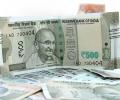
Raising overseas debt has become prohibitively expensive due to the depreciating rupee.

In FY23, the State Bank of India (SBI) reported a 57.4 per cent jump in its net profit to Rs 55,684.17 crore. But the chairman of the country's largest bank, Dinesh Khara's annual pay for this creditable performance was just Rs 37 lakh (his peers at state-run banks are no better off). Look at his private bank rivals - most pocketed in excess of Rs 7 crore annually - plus stock options.

Union Finance Minister Nirmala Sitharaman's call for making lending rates affordable may not resonate anytime soon as banks still struggle with margin compression, and await clues from the Reserve Bank of India (RBI) on liquidity and rate action. Hinting that any lending rate cut was some time away, State Bank of India (SBI) managing director Vinay M Tonse said there was still some aggression in the market regarding deposit pricing.

Russian shipments averaged 1.67 million barrels per day in January compared to 1.48 million bpd in December and 1.53 million bpd a year earlier.

The Reserve Bank on Wednesday said the amalgamation of Lakshmi Vilas Bank with DBS Bank India will come into force from November 27 and the moratorium imposed on the crisis-ridden lender will be removed on that day. The RBI issued the statement within hours of the Cabinet clearing the Scheme of Amalgamation of Lakshmi Vilas Bank Limited (LVB) with DBS Bank India Limited (DBIL).
They need to have 15 years of mainstream banking experience

In the Union Budget for Financial Year 2023-24 (FY24), Finance Minister Nirmala Sitharaman had held forth on the need for better governance and investor protection in the banking sector. She had proposed certain amendments to the Reserve Bank of India Act (RBI Act), 1934; the Banking Regulation Act (BR Act), 1949; and the Banking Companies (Acquisition and Transfer of Undertakings) Act, 1970.

Foreign banks set the template in consumer banking in its infancy, but have almost vacated this booming space.
Indian banks have successfully weathered the mayhem that shook the financial world in 2008.

Is the worst over for Indian banks? The past two years saw them ride on treasury trades as deposits soared and credit growth dipped sharply. Gross and net non-performing assets (NPAs) moved south, and the provision coverage ratio (PCR), capital buffers, and profitability indicators are back at pre-pandemic levels. So, what's the plot ahead?

The average time lag between the date of occurrence of a fraud and its detection is 23 months; for large frauds (Rs 100 crore and above), it was 57 months.

At a time when the role of corporate boards is once again under the scanner, independent directors on the Paytm Payments Bank board have indicated that red flags were raised over regulatory issues but they may have been late in doing so. "As independent directors, we asked questions and monitored responses to the Reserve Bank of India (RBI). Many changes were made on compliances. "Obviously, in retrospect, it was not found to be enough," said one of the independent directors on the condition of anonymity.
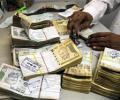
The government holds stakes ranging from 56% to 84% in 27 state-run banks.
 © 2026 Rediff.com - Advertise with us - Disclaimer - Privacy Policy - Sitemap - Feedback - About us - Terms of use - Grievances